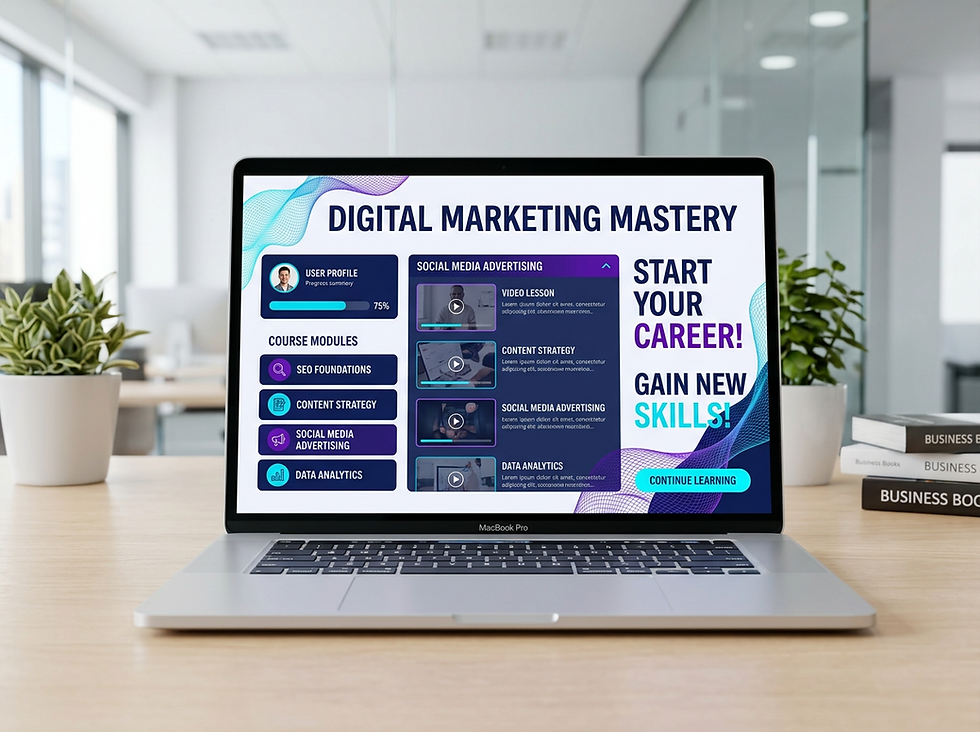
How AI Fits Within Digital Strategy Certification

Artificial intelligence (AI) is no longer just a futuristic concept. It has become a key part of how businesses plan and execute their digital strategies. Understanding AI’s role is essential for anyone pursuing a Digital Strategy Certification. This post explains how AI is a subset of digital strategy and why mastering it is crucial for professionals aiming to lead in the digital world.
AI is a tool that supports digital strategy. It helps companies analyze data, automate tasks, and create personalized experiences. Digital Strategy Certification programs teach how to use AI effectively within broader digital plans. This knowledge prepares professionals to drive innovation and improve business outcomes.

AI analytics dashboard showing real-time data insights
What Digital Strategy Certification Covers and How AI Fits Within Digital Strategy Certification
Digital Strategy Certification programs focus on building skills to design, implement, and manage digital initiatives. These programs cover areas such as:
Digital marketing fundamentals
Data analysis and interpretation
Customer experience design
Technology trends and tools
Leadership in digital transformation
AI Fits Within Digital Strategy Certification as a powerful technology that enhances many of these areas. For example, AI-driven data analysis helps marketers understand customer behavior better. AI-powered automation improves campaign efficiency. Learning how to integrate AI tools is part of mastering digital strategy.
One example of a comprehensive certification program is the Digital Strategy Institute’s Certified Digital Strategy Professional. This program includes modules on AI applications in digital business, helping learners connect AI capabilities with strategic goals.
How AI Supports Digital Strategy
AI supports digital strategy in several key ways:
Data-driven decision making: AI processes large data sets quickly, revealing patterns and trends that inform strategy.
Personalization: AI enables tailored customer experiences by analyzing preferences and behaviors.
Automation: AI automates repetitive tasks, freeing teams to focus on creative and strategic work.
Predictive analytics: AI forecasts market trends and customer needs, helping businesses stay ahead.
These AI functions are essential for effective digital strategies. Professionals with Digital Strategy Certification learn how to apply AI tools to improve marketing campaigns, customer engagement, and operational efficiency.
For instance, the Digital Strategy Institute’s AI in Digital Strategy Certification offers practical insights on using AI for customer segmentation and campaign optimization. This course complements the broader certification by focusing on AI’s strategic role.

Close-up of AI programming supporting digital strategy development
AI as a Subset of Digital Strategy Certification
AI is a subset of digital strategy because it is one of many tools and technologies used to achieve digital goals. Digital strategy is the overall plan that guides how a business uses digital resources to grow and compete. AI fits within this plan as a specialized area focused on intelligent automation and data insights.
Digital Strategy Certification programs include AI to ensure professionals understand:
How AI technologies work
How to select the right AI tools for business needs
How to integrate AI with other digital channels
Ethical considerations and data privacy in AI use
This knowledge helps professionals design strategies that leverage AI without losing sight of the bigger picture. AI is not a standalone solution but part of a coordinated digital approach.
The Digital Strategy Institute’s Certified Digital Strategy Leader program highlights AI’s role within leadership and innovation. It teaches how to lead teams that use AI responsibly and effectively as part of digital transformation.
Practical Examples of AI in Digital Strategy
To see how AI fits into digital strategy, consider these examples:
Customer service chatbots: AI chatbots handle common questions, improving response times and freeing human agents for complex issues. This supports a digital strategy focused on customer satisfaction and efficiency.
Content recommendation engines: AI analyzes user behavior to suggest relevant content, increasing engagement and conversions. This aligns with strategies aimed at personalized marketing.
Sales forecasting: AI predicts sales trends based on historical data, helping businesses plan inventory and marketing spend. This supports strategic decision-making and resource allocation.
These examples show AI as a tool within a larger digital plan. Digital Strategy Certification teaches how to evaluate and implement such AI solutions to meet strategic goals.

Team collaborating on integrating AI into digital marketing strategy
Why AI Knowledge Matters for Digital Strategy Professionals
Digital strategy professionals must understand AI to stay relevant. AI changes how businesses operate and compete. Without AI knowledge, professionals risk falling behind.
Certification programs that include AI prepare learners to:
Identify AI opportunities in their organizations
Communicate AI benefits and risks to stakeholders
Manage AI projects alongside other digital initiatives
Ensure ethical AI use and compliance with regulations
The Digital Strategy Institute offers courses that build these skills, helping professionals lead digital transformation confidently.
Final Thoughts on AI and Digital Strategy Certification
AI is a vital part of digital strategy. It provides tools that improve decision-making, customer engagement, and operational efficiency. Digital Strategy Certification programs include AI to equip professionals with the skills needed to use this technology effectively.
Understanding AI as a subset of digital strategy means seeing it as one piece of a larger puzzle. Professionals who master both digital strategy and AI will be well-positioned to lead in today’s digital economy.
For those looking to advance their careers, exploring certifications like those from the Digital Strategy Institute offers a clear path to gaining this valuable expertise.
This post is for informational purposes only and does not constitute professional advice.